LuisCloud
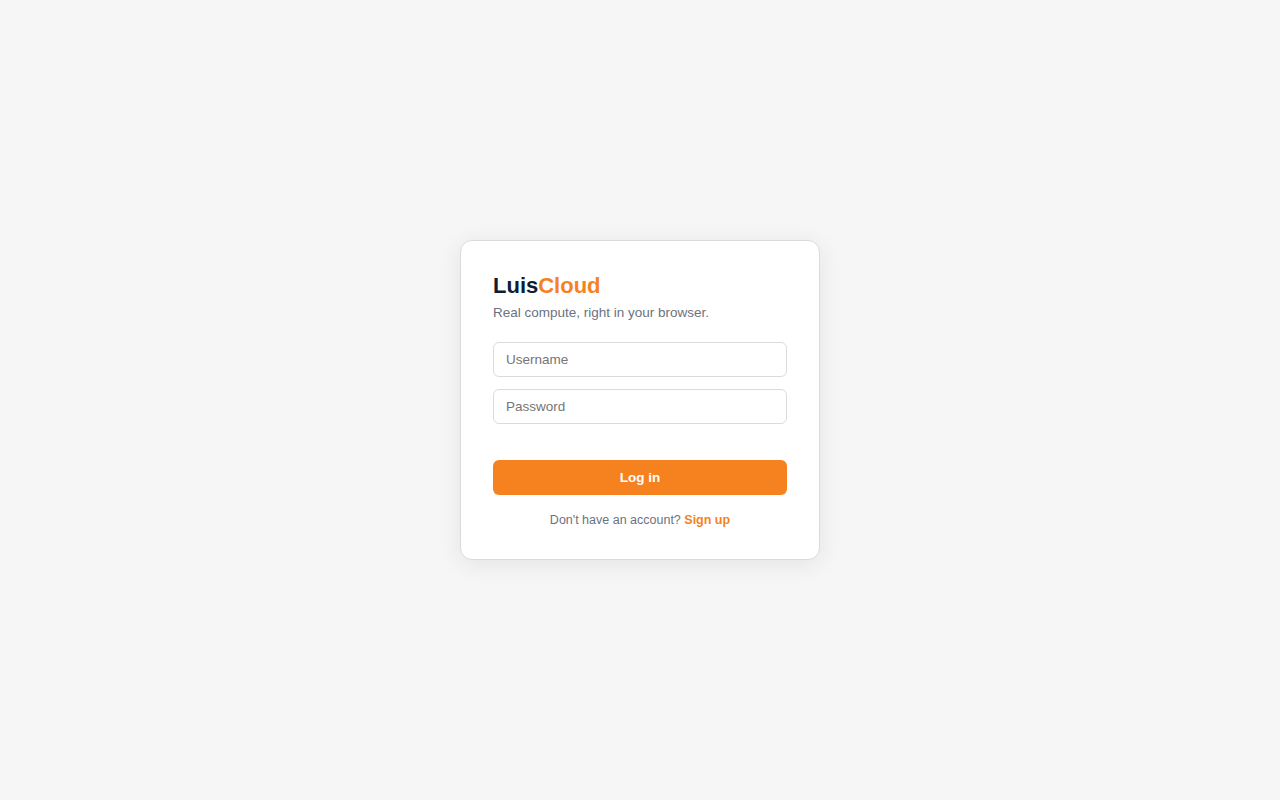
LuisCloud is a real, multi-user cloud hosting platform giving each account its own genuinely isolated Linux user on a shared virtual machine, styled visually after Cloudflare's own dashboard.
Hosting methods
- Manual command hosting -- runs any user-supplied shell command via
nohupunder the account's own Linux user, then tunnels the port publicly withbore - Folder upload -- upload a static site folder directly; it's hosted and tunneled automatically, with optional HTTP Basic Auth protection
- AI-generated pages and apps -- describe a page or small app and an LLM writes it (a plain HTML page, or a dependency-free Python + sqlite backend), then hosts it immediately
- Fixed templates -- a Static Site, a JSON API, and a SQLite-backed CRUD app, deployed instantly with no AI call and no risk of broken generated code
Tiers and quotas
Accounts are Free, Pro, or Ultra, each with separate general file storage and database storage quotas plus a concurrent tunnel limit. Ultra is not a paid tier -- it is a free usage-milestone reward, automatically granted once an account has hosted enough apps. AI generation is rate-limited to a flat number of generations per hour, applied equally regardless of tier.
Other features
- Analytics -- per-host request counts and status codes, parsed directly from that host's own web server access log rather than a separate tracking layer
- Database file browser -- lists every sqlite/db file a hosted app has created, with size and which host it belongs to
- A terminal UI (TUI) client, installable as a standalone command, for managing hosts, templates, AI generation, and usage entirely from a terminal
- Onboard-your-agent prompt -- a copyable setup prompt describing the full API, so an AI coding agent with real tool access can drive an account directly via HTTP requests
Architecture
Like LuisSearch, LuisCloud runs as a Python stdlib http.server backend with SQLite for accounts and host records, fronted by a Cloudflare Pages deployment whose _worker.js proxies API traffic to the real backend running behind a cloudflared tunnel. Real compute happens on a KVM-based virtual machine reachable over SSH, where each account's Linux user and hosted processes actually live.